
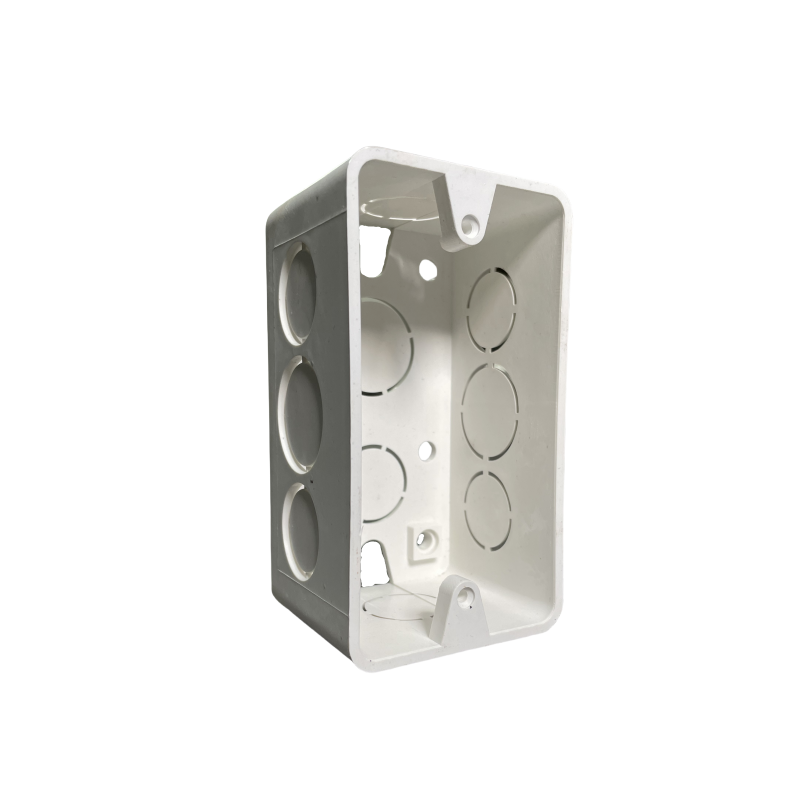
A PVC box, or Polyvinyl Chloride box, is an electrical enclosure used in wiring installations to house and protect wire connections, switches, or outlets. They’re a modern alternative to metal electrical boxes and are a staple in both residential and commercial electrical work, especially in non-metallic wiring systems.
Key Features and Functions
- Insulation: PVC is a type of plastic that is a natural electrical insulator. This is a major safety advantage, as it reduces the risk of electrical shock if a live wire were to accidentally touch the inside of the box. Unlike metal boxes, a PVC box doesn’t need to be grounded.
- Protection: The primary function of the box is to protect wiring from the environment and from physical damage. It also shields people and surrounding materials from live wires and the risk of fire from short circuits.
- Durability and Cost: PVC boxes are lightweight, highly durable, and resistant to corrosion, rust, and chemicals. They are also significantly cheaper and easier to work with than metal boxes, as they can be cut and altered with standard tools.
- Installation: PVC boxes come with pre-molded knockouts—perforated sections that can be easily removed to create openings for wires to pass through. They’re typically secured to wall studs or ceiling joists using screws or nails.