
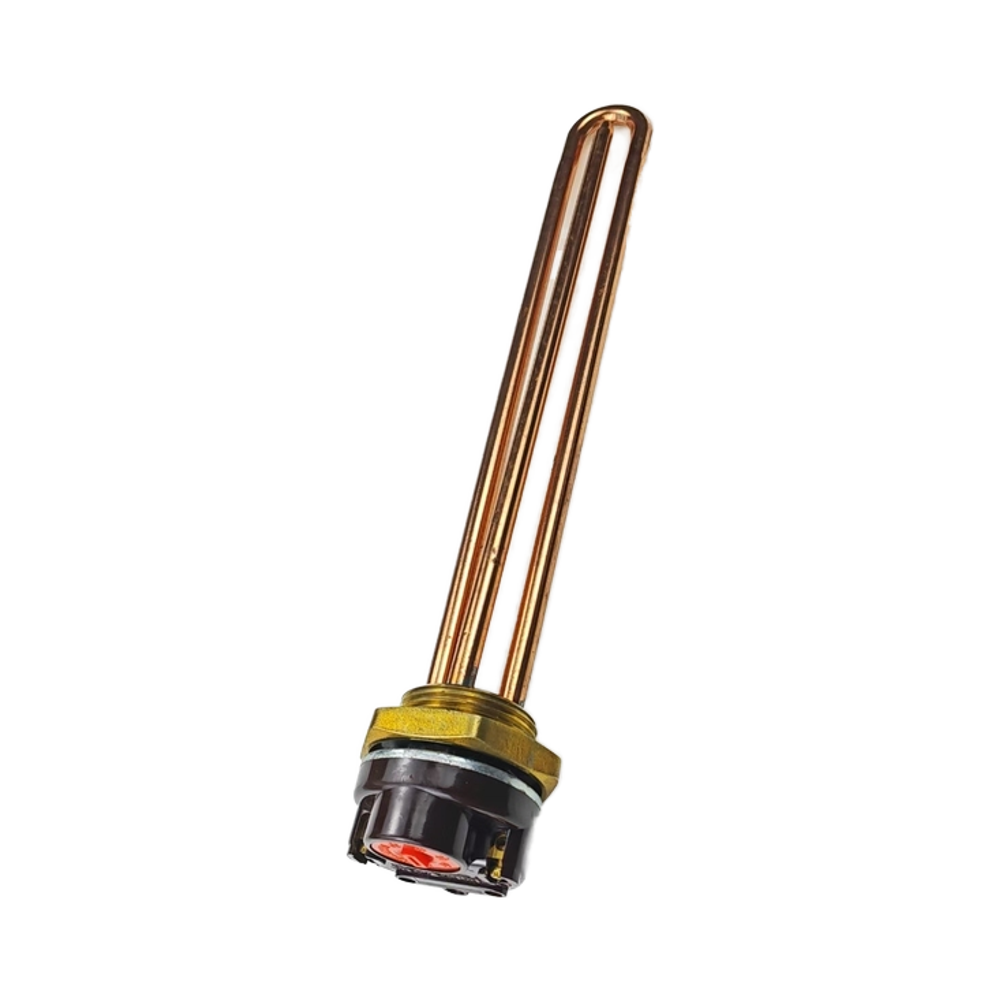
How a Water Heater Element Works
The heating element is essentially a resistor. It consists of a high-resistance wire, typically made of a nickel-chromium alloy (nichrome), that is coiled inside a metal sheath. This sheath is a protective outer layer, often made of copper, stainless steel, or Incoloy, which prevents the resistance wire from coming into direct contact with the water. The space between the wire and the sheath is filled with an electrical insulator, like magnesium oxide powder, which is also a good thermal conductor.
When the water heater’s thermostat calls for heat, an electric current flows through the resistance wire. Due to its high resistance, the wire heats up intensely. The heat is then transferred from the wire, through the insulating powder and the metal sheath, and into the surrounding water. This process continues until the water reaches the temperature set on the thermostat, at which point the power to the element is shut off.
Dual-Element Water Heaters
Habitant faucibus sollicitudin fames quam scelerisque amet urna non risus diam netus pellentesque ac sit malesuada risus nisi, aliquet rutrum scelerisque cras habitant lorem tortor sit mauris eu ac id enim urna, adipiscing convallis viverra egestas.
Sapien sagittis interdum quisque urna luctus eget morbi vivamus eget cras scelerisque lectus proin aliquam erat pellentesque pellentesque sed lectus volutpat semper pellentesque aliquam in metus.