
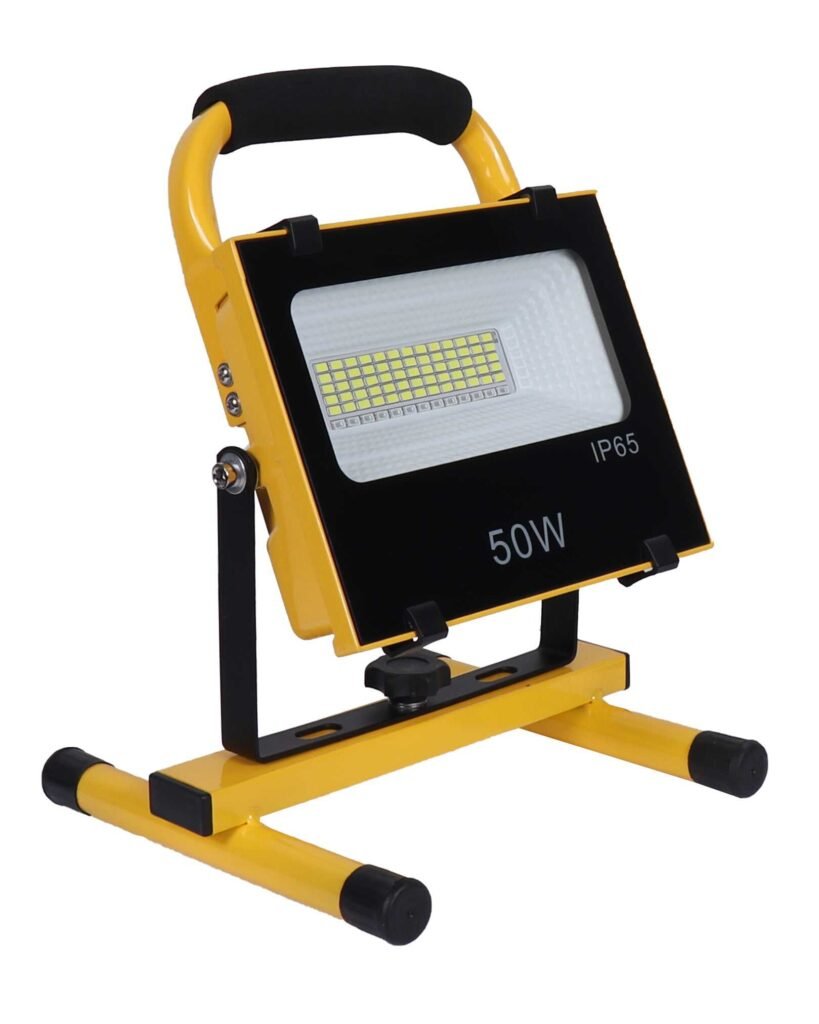
Key Characteristics and Function
Integrated Components: An LED floodlight fixture typically includes several key components:
LED Technology: At its core, an LED street floodlight uses a series of light-emitting diodes to produce light. Unlike traditional incandescent bulbs that use a heated filament, or high-intensity discharge (HID) lamps that rely on gas, LEDs are solid-state devices. This means they are more durable and convert a higher percentage of electrical energy into visible light, with minimal energy wasted as heat.
Broad Beam Angle: A key distinction of floodlights is their wide beam angle, which allows them to illuminate a large, open area from a single point. This is in contrast to a traditional street light, which typically has a more focused beam designed to illuminate a long, narrow stretch of road.
Durability: These lights are built to withstand harsh outdoor conditions. Their robust construction, often made from aluminum alloy, and a high Ingress Protection (IP) rating (like IP65 or IP66) make them resistant to dust, water, and extreme temperatures.