
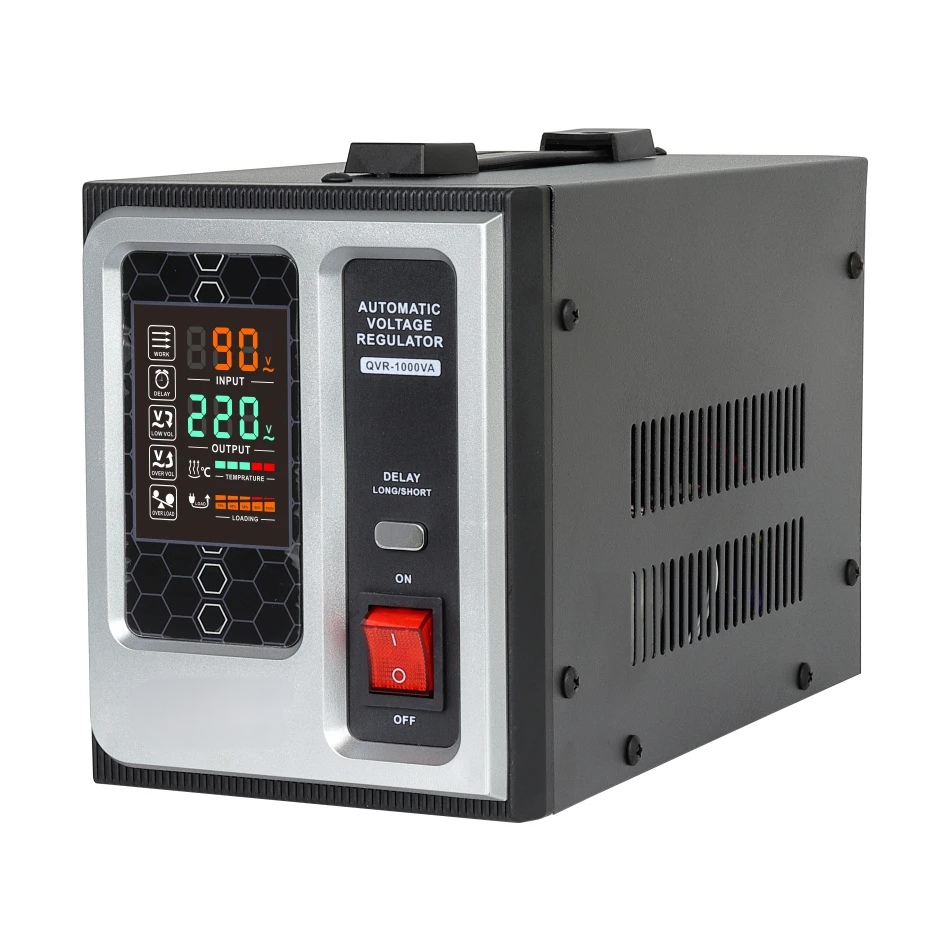
An AC power stabilizer, also known as a voltage stabilizer or Automatic Voltage Regulator (AVR), is an electrical device designed to protect appliances from harmful voltage fluctuations. It ensures a consistent, safe voltage supply to connected equipment, regardless of variations in the incoming power from the grid.
How it Works
The electrical grid doesn’t always deliver a perfect, steady voltage. Factors like a sudden increase in demand, lightning strikes, or issues at a power station can cause the voltage to spike (overvoltage) or dip (undervoltage). These fluctuations can damage sensitive electronic components, shorten the lifespan of appliances, or cause them to malfunction.
An AC power stabilizer works by continuously monitoring the incoming voltage. When it detects a fluctuation that falls outside a safe, predetermined range, it automatically adjusts the voltage using internal components, such as a transformer and a control circuit. It either “bucks” the voltage down if it’s too high or “boosts” it up if it’s too low, ensuring the output voltage to your appliance remains stable and within its safe operating range.
Types of AC Power Stabilizers
There are several types of stabilizers, each with a different mechanism for voltage regulation.
Static Stabilizers: These have no moving parts and use advanced electronic components like thyristors to regulate voltage. They offer a very fast response time and are highly reliable, making them ideal for high-precision applications, though they are generally the most expensive.
Relay-Type Stabilizers: These are the most common and economical. They use a series of relays to switch between different transformer taps, adjusting the output voltage in distinct steps. While effective, their response is not continuous, which can lead to minor fluctuations in the output.
Servo-Controlled Stabilizers: These are more precise and accurate. They use a servo motor to smoothly adjust the position of a carbon brush on a variable transformer, providing a continuous and highly accurate output voltage. They are more expensive and are often used for larger or more sensitive equipment.